
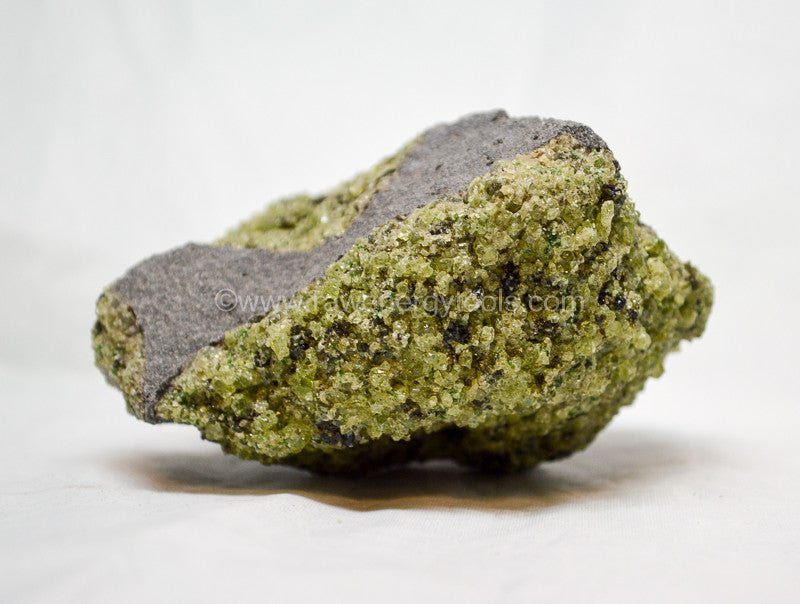
When most people think of Peridot, they picture its unmistakable olive green color and its reputation as a stone of renewal and abundance. But long before it found a place in modern crystal collections, Peridot was treasured by kings, queens, and entire civilizations who believed it possessed extraordinary power.
Its story begins thousands of years ago.
The Island That Guarded the "Gem of the Sun"
Hidden within the Red Sea lies a small volcanic island once known as Topazios, now called Zabargad or St. John's Island.
For over 3,500 years, this remote island produced some of the world's finest Peridot.
According to ancient writings, the island was heavily guarded. Mining was often forbidden during daylight hours because the bright green crystals blended almost perfectly into the surrounding volcanic rock. Instead, miners searched by torchlight after sunset, where legend says the crystals seemed to glow against the darkness.
Whether the stones truly glowed or simply reflected the firelight remains a mystery.
What isn't a mystery is how valuable they became.
A Favorite of Egyptian Royalty
The ancient Egyptians called Peridot the "Gem of the Sun."
It was believed to protect its wearer from negativity while encouraging vitality, confidence, and prosperity.
Many historians believe Peridot adorned royal jewelry and ceremonial objects belonging to Egyptian nobility. Even Cleopatra's famous emerald collection is thought by some scholars to have actually contained Peridot, as the two gemstones were often confused throughout history.
Imagine that.
One of history's most recognizable queens may have been wearing Peridot all along.
A Stone That Traveled Across the Ancient World
As trade routes expanded, Peridot found its way into the hands of Greeks, Romans, and later European royalty.
Throughout history, it became associated with:
- Prosperity
- Protection during travel
- Good fortune
- Emotional renewal
- Personal confidence
During the Middle Ages, Peridot even appeared in churches and religious treasures, where its bright green color symbolized hope and spiritual light.
Born in Fire
Perhaps the most fascinating part of Peridot's story isn't human history at all.
Unlike many gemstones that slowly grow within underground cavities, Peridot forms deep within Earth's mantle under immense heat and pressure.
Volcanic eruptions carry it toward the surface, making every specimen a traveler from one of the deepest places our planet can offer.
Some exceptionally rare Peridot crystals have even been discovered inside meteorites, meaning they formed beyond Earth itself before eventually arriving here.
Few gemstones can claim such an extraordinary origin.
Why Peridot Continues to Inspire
Across modern crystal traditions, Peridot remains associated with growth, optimism, gratitude, and the courage to embrace change.
Whether viewed as a beautiful mineral specimen, appreciated for its remarkable geological history, or incorporated into personal spiritual practice, Peridot continues to remind us that some of life's greatest transformations begin quietly beneath the surface.
Just as this vibrant green crystal spends countless years hidden deep within the Earth before emerging into the light, our own periods of growth are often taking place long before anyone else can see them.
A Thought to Carry With You
Perhaps that's why Peridot has endured for thousands of years.
Not because it promises instant change, but because it reminds us that the strongest foundations are often built in places no one else ever sees.
About the Author
J Lynn Greenwell is the owner of Raw Energy Tools and has studied crystals, minerals, folklore, and metaphysical traditions for many years. Through Raw Energy Tools, she shares educational articles exploring the history, geology, symbolism, and traditional uses of natural stones and spiritual tools.