
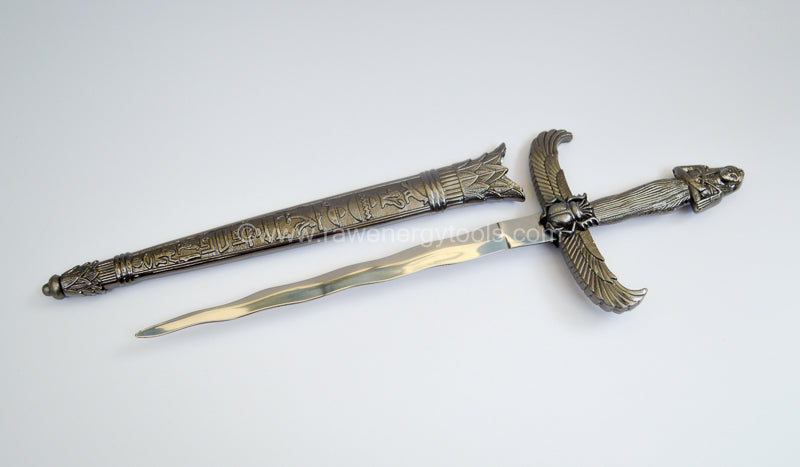
Understanding One of Witchcraft's Most Recognized Ritual Tools
An athame is one of the most recognizable ritual tools used within many modern Pagan, Wiccan, and ceremonial magical traditions. Although often mistaken for an ordinary knife, an athame is generally considered a symbolic instrument rather than one intended for physical cutting.
For many practitioners, the athame represents focus, intention, personal will, and the direction of energy during ritual work. While traditions vary, it is commonly associated with the element of Air, though some systems instead associate it with Fire. Neither correspondence is universally accepted, highlighting the diversity found within modern spiritual practices.
Unlike a utility knife or kitchen blade, an athame is typically reserved for ritual use. Many practitioners choose not to use it for everyday tasks, believing it becomes a personal spiritual tool through regular use and intention.
How Is an Athame Used?
The athame is most often used symbolically rather than physically. Depending on one's tradition or personal practice, it may be used to:
- Cast or open a sacred circle.
- Direct personal energy during ritual.
- Invoke or dismiss the four directions.
- Symbolically cut energetic cords or release unwanted influences.
- Bless ritual tools or sacred spaces.
- Trace symbols, sigils, or protective boundaries in the air.
- Focus intention during meditation or spell work.
Many practitioners describe the athame as an extension of personal will rather than a source of power itself. The tool simply provides a physical way to focus intention.
Does an Athame Cut Physical Objects?
Generally, no.
Most traditions recommend that an athame not be used for mundane cutting tasks. Instead, a separate ritual knife called a boline is commonly used when physically harvesting herbs, cutting cords, preparing ingredients, or performing other practical work.
Keeping the athame reserved for spiritual practice helps many practitioners maintain its symbolic significance.
Choosing an Athame
There is no single "correct" athame.
Some feature simple black handles, while others are highly decorative with engraved blades, crystals, dragons, pentacles, or Celtic artwork. Some practitioners prefer a traditional double-edged blade, while others choose designs that simply resonate with them personally.
The most important consideration is often how the athame feels in your hand and whether it reflects your personal spiritual path.
Caring for Your Athame
Many people choose to keep their athame in a special place when not in use, such as on an altar, within a ritual box, or wrapped in cloth.
Depending on personal belief, practitioners may periodically cleanse or dedicate their athame through meditation, incense, moonlight, sound, or other spiritual practices before using it during ritual.
Since athames are often considered deeply personal tools, many practitioners prefer that others not handle them without permission.
A Tool of Intention
An athame is not believed to possess power on its own. Rather, it serves as a symbolic extension of the practitioner's focus, intention, and spiritual practice.
Whether used in Wicca, ceremonial magic, eclectic Paganism, or personal ritual work, the athame remains one of the most enduring symbols of modern magical traditions. As with all spiritual tools, there is no single right way to work with an athame. Individual traditions and personal beliefs vary widely, making respect for different practices an important part of the journey.