Orthoceras Fossil Egg
Raw Energy Tools
SPECIMEN DETAILS
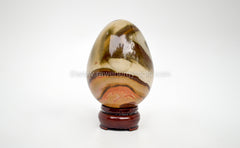
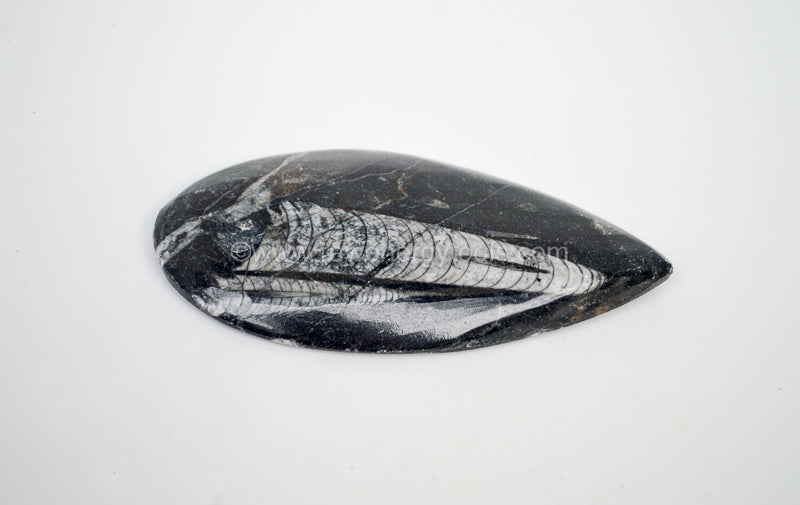
This polished Orthoceras fossil has been shaped into a smooth egg form while preserving the striking remains of an ancient straight-shelled marine cephalopod within the stone. The contrasting fossil structure stands out beautifully against the dark matrix, creating a piece that combines natural history with polished decorative craftsmanship.
Approximate Size: 5" × 2.5" × .5"
Origin: Morocco
Because this is a natural fossil specimen, variations in fossil pattern, coloration, matrix, markings, and polish are part of its character.
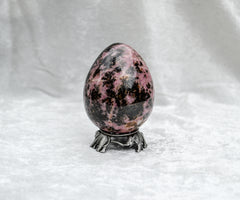
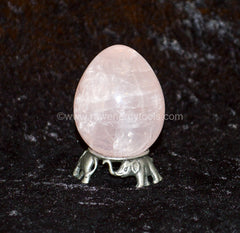
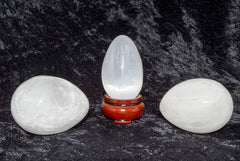
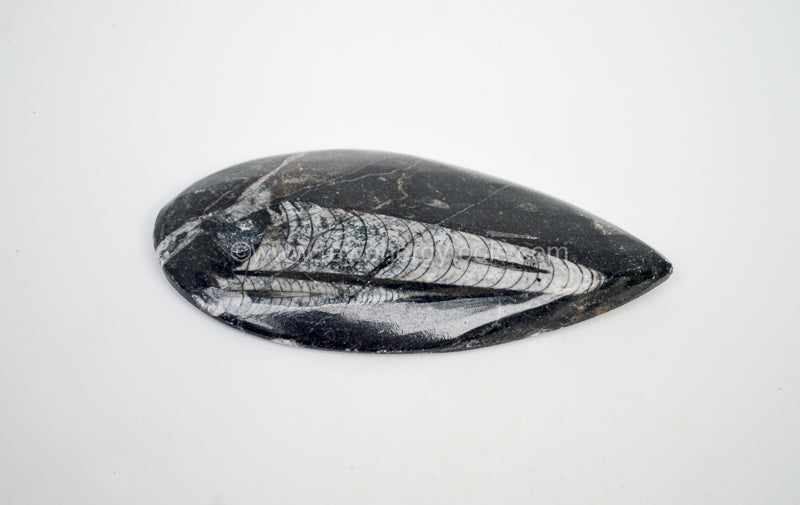
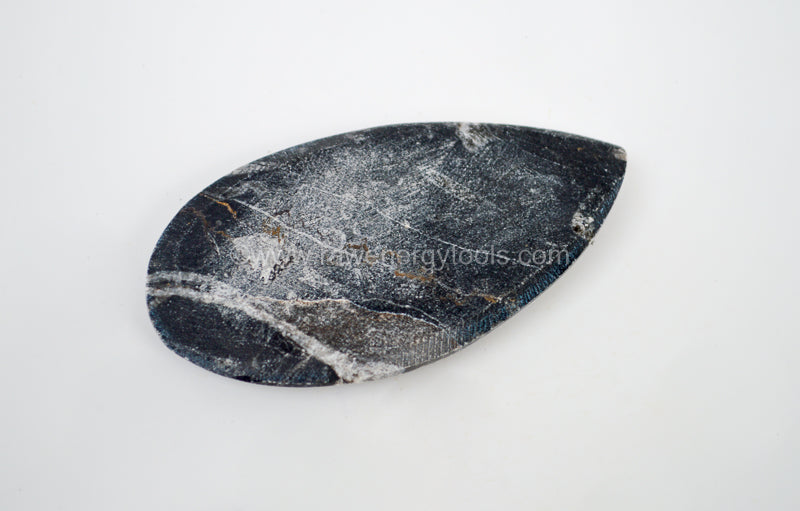
💜 You will receive the Orthoceras fossil egg pictured.
A FOSSIL OF ANCIENT LIFE, TIME, AND TRANSFORMATION
Long before humans walked the Earth, ancient cephalopods inhabited prehistoric seas. Their straight shells were divided internally into chambers, and over immense stretches of geological time, some of their remains became preserved within sedimentary rock.
Today, polished fossils commonly sold under the trade name Orthoceras reveal portions of those ancient shells as pale, elongated patterns against darker stone.
Beyond their geological history, fossils have also developed symbolic associations with longevity, transformation, ancestral wisdom, grounding, and our connection to the distant past.
GEOLOGICAL INFORMATION
The fossils commonly marketed as Moroccan Orthoceras are remains of extinct straight-shelled cephalopods preserved within marine sedimentary rock. These animals were relatives of modern cephalopods such as squid, octopuses, and nautiluses.
Their shells contained a series of chambers separated by walls called septa. Depending on how a fossil is cut and polished, portions of this internal structure may remain visible as repeating lines or segmented patterns.
The name Orthoceras is widely used in the mineral and fossil trade for these specimens. However, not every straight-shelled cephalopod fossil sold under that name belongs to the scientific genus Orthoceras. Moroccan material marketed as Orthoceras may represent other extinct orthoconic cephalopods.
MINERAL DETAILS
Origin / Locality: Morocco
Primary Composition: Fossilized cephalopod remains within sedimentary rock, commonly carbonate-rich material
Crystal System: Not applicable to the fossil as a whole
Hardness: Varies according to the fossil and surrounding matrix
Luster: Dull naturally; polished surfaces may appear smooth to glossy
Color: Black, gray, brown, cream, and white
Element: Traditionally associated with Earth and Water
HISTORY & FOLKLORE
Fossils have fascinated people for centuries, long before their biological origins were fully understood. Different cultures developed their own explanations for unusual shapes preserved within stone, sometimes interpreting fossils as sacred objects, evidence of legendary creatures, or naturally formed symbols.
Modern science gives these specimens another remarkable story. They are preserved evidence of organisms that lived in ancient marine environments and provide a physical connection to life from an unimaginably distant past.
Because of that extraordinary age, fossils have also become symbolic in modern metaphysical traditions of endurance, memory, ancient wisdom, evolution, and the passage of time.
TRADITIONAL METAPHYSICAL ASSOCIATIONS
Within modern crystal and metaphysical traditions, Orthoceras fossils are commonly associated with grounding, personal growth, confidence, stability, and learning from the past.
Their ancient origins have also made them symbolic of perspective. They may be used as reminders that change is part of a much larger cycle and that growth often happens gradually over time.
💜 Grounding
💜 Stability
💜 Ancient wisdom
💜 Transformation
💜 Perspective
💜 Confidence
💜 Personal growth
💜 Connection with the past
TRADITIONAL HEALING ASSOCIATIONS
In contemporary metaphysical practices, Orthoceras is sometimes used symbolically in work centered around vitality, balance, strength, and connection with the physical body.
These associations belong to spiritual and metaphysical traditions and are not established medical properties of fossils.
SPELLCRAFT & RITUAL USES
Orthoceras may be incorporated into spiritual practices involving ancestry, transformation, grounding, endurance, wisdom, and long-term intentions.
Its connection with ancient life can make it especially meaningful for meditation on personal history, releasing patterns from the past, honoring change, or recognizing how earlier experiences have shaped the present.
The egg shape adds another layer of symbolism, traditionally representing beginnings, potential, creation, renewal, and emergence.
SPIRITUAL CORRESPONDENCES
Element: Earth and Water
Themes: Ancient wisdom, grounding, transformation, endurance, perspective
Chakra: Root
Planetary Associations: Earth and Saturn may be used in some modern correspondence systems
Zodiac: Associations vary among traditions
Correspondences are not universal and may differ considerably among practitioners and spiritual traditions.
CARE & CLEANSING
Clean your polished Orthoceras fossil gently with a soft, dry or slightly damp cloth. Avoid harsh chemicals, abrasive cleaners, prolonged soaking, and acidic substances, which may damage carbonate-based fossil material or the surrounding matrix.
For spiritual cleansing practices, smoke, sound, moonlight, visualization, or placement near other traditionally cleansing stones may be gentler alternatives to water-based methods.
A Thought to Carry With You
This fossil began its story in an ancient sea long before our own existed. Perhaps that is its quiet reminder: we are each part of a story much larger than the moment we happen to be standing in. 💜
IMPORTANT DISCLAIMER
The metaphysical, spiritual, magical, and traditional healing associations described here are based on folklore, historical traditions, modern metaphysical practices, and personal belief systems. They are provided for educational and spiritual interest only and are not scientifically established properties or substitutes for professional medical advice, diagnosis, or treatment.
QUESTIONS & ANSWERS
Have a Question?
Be the first to ask a question about this.